
Why Are More Modern Homes Replacing Traditional Switches With Smart Touch Panels?

Why Are More Modern Homes Replacing Traditional Switches With Smart Touch Panels?
Key Takeaways
- A smart home touch panel combines multiple home controls into one sleek interface, reducing wall clutter and improving convenience.
- Many homeowners are choosing touch panels for better control over lighting, security, entertainment, and energy usage.
- Smart touch panels can support automation features that help simplify daily routines.
- Beyond appearance, these systems can improve functionality and create a more connected living environment.
Why Are Traditional Wall Switches Starting to Feel Outdated?
For years, traditional switches have served one basic purpose, turning electrical devices on or off. However, homes today are changing rapidly. Modern living spaces are becoming more connected, technology-driven, and focused on convenience.
Many homeowners now want more than simply controlling a light bulb. They want a home environment that can adapt to their lifestyle, reduce unnecessary effort, and create a cleaner, more organised space.
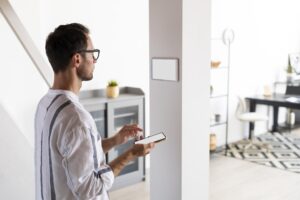
This shift is one reason why the smart home touch panel has become increasingly common in newer homes and renovation projects. Instead of multiple rows of switches across different walls, homeowners can manage various functions through one integrated interface.
What Makes a Smart Home Touch Panel Different From Traditional Switches?
A smart home touch panel is designed to centralise and simplify home management. Rather than using several separate switches, users can control multiple systems from a single panel. Common functions may include,
- Lighting control
- Air-conditioning settings
- Curtain or blind operation
- Smart door lock access
- Security monitoring
- Music and entertainment systems
- Home scenes and automation settings
For example, instead of switching off every room individually before leaving for work, a homeowner could activate a single setting that turns off lights, adjusts the air-conditioning, and activates security settings simultaneously.
Why Are Modern Homeowners Choosing Smart Touch Panels?
Modern homes often focus on maximising space efficiency and functionality. Technology that supports convenience while maintaining a neat appearance can appeal to homeowners. Several reasons may contribute to the growing interest,
Cleaner and More Minimalist Interiors
Traditional switches can create visual clutter, especially in larger homes. A smart home touch panel offers,
- A cleaner wall design
- Fewer visible switches
- A modern appearance
- Better organisation of controls
This may complement contemporary interior design styles commonly seen in modern homes.
Easier Everyday Living
Daily routines can become simpler when frequently used actions are grouped together. Such as,
- “Good Morning” mode turning on selected lights and opening curtains
- “Movie Time” mode dimming lights automatically
- “Leaving Home” mode switching off connected devices
These features can reduce repetitive tasks.
Better Control Across Multiple Devices
Managing different household systems separately can become inconvenient. Smart panels can provide,
- Centralised access
- Reduced need for multiple remote controls
- Quick adjustments from one location
Potential Energy Awareness
Some smart systems can provide information about usage patterns. This may help homeowners,
- Monitor electrical usage
- Identify unnecessary energy consumption
- Make informed adjustments to household settings
Are Smart Touch Panels Only About Technology and Appearance?
Not necessarily. While sleek design often attracts attention, many homeowners also consider practical benefits. These may include,
- Simplifying home management
- Supporting a connected lifestyle
- Reducing the number of physical controls
- Allowing easier adjustments for household routines
The goal is often not simply adding more technology, but creating a home environment that feels easier to manage.
Frequently Asked Questions
1. Can a smart home touch panel control multiple rooms?
Yes. Depending on the system setup, a panel can be configured to manage devices and settings across multiple areas of a home.
2. Is a smart home touch panel suitable for smaller homes?
Yes. Smart panels can be used in both compact apartments and larger houses. The setup usually depends on individual household requirements.
3. Can existing homes install smart touch panels?
In many situations, installation can be considered during renovations or home upgrades. Requirements may vary depending on the home’s existing electrical setup.
4. Are smart touch panels difficult to use?
Most systems are designed with user-friendly interfaces that aim to make navigation straightforward for different age groups.
Thinking About Creating a More Connected Home?
As homes continue to evolve, many homeowners are exploring smarter ways to manage daily living. A smart home touch panel can bring together convenience, functionality, and a cleaner design experience within one integrated system.
If you are based in Singapore and exploring smart home solutions, Mowe offers solutions designed to support modern living needs and home automation goals. Book a consultation with Mowe today and discover how a smarter home experience can fit into your lifestyle.
RECENT POST