How Can Smart Ceiling Fans Make Your Home More Energy Efficient?
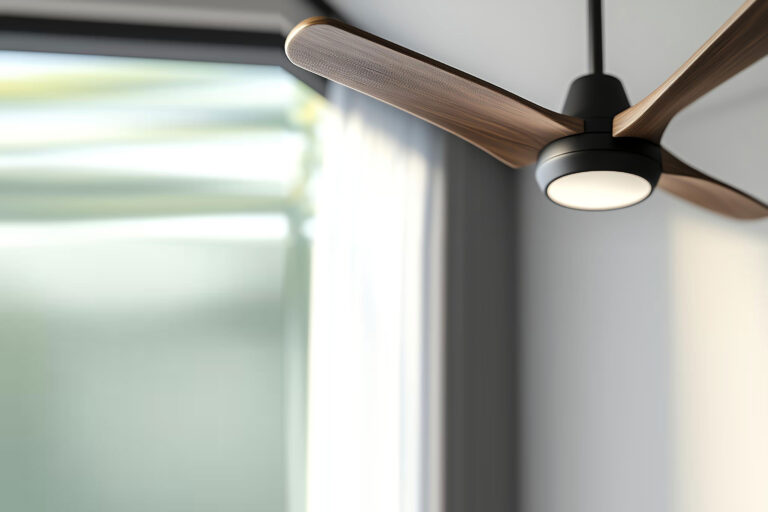
How Can Smart Ceiling Fans Make Your Home More Energy Efficient?
Key Takeaways
- Ceiling fans can make a room cool without lowering the room’s actual temperature.
- Using a ceiling fan alongside air-conditioning can allow you to set the thermostat higher while maintaining a similar level of perceived comfort.
- Smart features such as scheduling, timers, sleep modes, and remote monitoring can help prevent unnecessary fan usage.
- Reverse functions can help circulate warm air during cooler periods, depending on the room and ceiling fan setup.
Singapore’s warm and humid climate means keeping your home comfortable often comes with a cost. Air-conditioning can provide effective cooling, but running it for long periods can also contribute significantly to household electricity consumption. A ceiling fan offers another way to manage how your home feels. Rather than lowering the temperature of the entire room, a fan circulates air across your skin, creating a cooling effect that can make the space feel more comfortable.
Now, add smart technology to that everyday appliance. With Möwe’s smart ceiling fans, you can adjust airflow, set schedules, monitor usage remotely, and create routines that suit your daily habits. Instead of leaving your fan running unnecessarily, you can automate when it operates and how it responds to your routine. That is where smart home automation can support more energy-conscious living.
How do ceiling fans help you feel cooler?
A ceiling fan does not actually lower the temperature of a room in the same way an air conditioner does. Instead, it moves air around the room and across your skin. This increased air movement can help sweat evaporate more quickly, creating a cooling sensation. That means you may be able to feel comfortable at a slightly higher thermostat setting when using a ceiling fan alongside your air-conditioner.
For example, instead of relying entirely on air-conditioning to create a cooler-feeling room, you can combine:
Air-conditioning + ceiling fan = cooling + air circulation
The exact energy savings will depend on your home, air-conditioner, fan, thermostat setting, and how long each appliance operates. However, using airflow strategically can help reduce unnecessary reliance on lower air-conditioning temperatures.
How can smart features improve fan efficiency?
A conventional ceiling fan requires you to switch it on and off manually. A smart ceiling fan gives you more ways to manage its operation.
Möwe’s smart ceiling fans offer features that can help you use airflow more intentionally.
Set the Right Speed
With six speed selections, you can choose the airflow level that suits the room and activity instead of running the fan at maximum speed all the time.
Schedule Your Fan
Set a timer or schedule for 1–8 hours so the fan can switch off automatically after a specific period.
This can be particularly useful at night or when you know you will only need airflow for a certain amount of time.
Use Sleep Mode
Sleep Mode supports overnight routines, helping you avoid leaving the fan running indefinitely when it is no longer needed.
Monitor Remotely
With Wi-Fi connectivity and the iAppliances app, you can monitor and manage your fan remotely.
Forgot to switch it off before leaving home? You can check and adjust it without needing to return.
Create Automated Scenes
Connected lighting and fan settings can be combined into scenes that match your routine.
For example, an evening scene could activate your ceiling fan and adjust the LED lighting when you arrive home.
Can a ceiling fan reduce air-conditioning use?
Potentially, yes—but the key is how you use it.
A ceiling fan can complement air-conditioning by improving air movement and helping you feel cooler at a higher thermostat setting.
For example:
Without a fan
Air-conditioner set to a lower temperature → more cooling required
With a fan
Air-conditioner set to a slightly higher temperature + increased airflow → similar perceived comfort with potentially less air-conditioning demand
The U.S. Department of Energy recommends using ceiling fans to supplement air-conditioning and notes that fans can allow thermostat settings to be raised while maintaining the same level of comfort. Fans cool people, rather than the room itself, so they should be switched off when the room is unoccupied.
This is where smart scheduling becomes useful: you can automate your fan around the times when people are actually using the space.
What smart fan features should you look for?
If you are considering a smart ceiling fan, look beyond its appearance and airflow performance. Think about how its features fit into your everyday routine.
Wi-Fi Connectivity
A Wi-Fi-enabled fan can connect to your smart home system and give you access to connected features through your mobile app.
Remote Monitoring
Check and manage your fan remotely, even when you are away from home.
Multiple Speed Settings
More speed options give you greater flexibility over airflow and allow you to choose the level that suits the room.
Timer and Scheduling
Set the fan to operate for a specific duration or according to your daily routine, helping prevent unnecessary operation.
Natural Breeze Mode
Möwe’s 1/f Yuragi Mode varies the airflow to create a more natural-feeling breeze rather than maintaining one constant speed.
Reverse Function
The reverse function changes the direction of airflow. Depending on your room and ceiling fan setup, this can help circulate air differently during different conditions.
Adjustable LED Lighting
Some smart ceiling fans combine airflow and lighting in one appliance, with adjustable LED lighting and scene-setting options.
How could a smart fan fit into your daily routine?
Imagine coming home after a warm day in Singapore. Your evening routine could be set up so that your ceiling fan starts operating before you settle into the living room. The fan runs at a comfortable speed while your air-conditioner operates at a higher temperature setting.
Later at night, the fan switches to Sleep Mode and eventually turns off according to your schedule. You do not have to remember every step manually. Once your routines are configured, your smart home can handle the small details for you. That is the practical benefit of smart home automation: using technology to match your home’s operation to the way you actually live.
Where should you use a smart ceiling fan?
Smart ceiling fans can be useful in different areas of the home, depending on your space and cooling needs.
Living Room
Use airflow to keep shared spaces feeling fresh while you relax, entertain, or spend time with family.
Bedroom
Combine adjustable airflow and Sleep Mode with your nighttime routine for more personalised comfort.
Home Office
Keep air circulating while you work without constantly adjusting the fan manually.
Dining Area
Increase airflow around the dining area when the room is occupied, particularly during meals or gatherings.
Six sizes for different spaces
The right ceiling fan should suit the size and layout of your room. A fan that is too small may not circulate enough air, while an oversized fan may not be suitable for every space.
Möwe offers six different ceiling fan sizes, along with a variety of colour options, giving you more flexibility when selecting a fan for your home’s space and interior. Consider your room dimensions, ceiling height, furniture arrangement, and desired airflow before choosing a size.
Contact Us
Energy efficiency is not simply about using less technology. It is about using technology more thoughtfully. A smart ceiling fan gives you greater control over how and when you cool your home. Features such as scheduling, timers, sleep mode, and remote monitoring help reduce unnecessary operation while maintaining everyday comfort. In Singapore, pairing smart airflow with considered air-conditioning use can support a more energy-conscious home.
With Möwe, your ceiling fan goes beyond everyday performance. It becomes an intelligent, connected part of the way you live.
RECENT POST