
How Do Smart Temperature Sensors Help Homes Stay Comfortable During Summer?
How Do Smart Temperature Sensors Help Homes Stay Comfortable During Summer?
In hot and humid climates, maintaining indoor comfort is a daily challenge. Air-conditioning systems often work overtime, leading to higher electricity bills and uneven cooling across different rooms. This is where a smart temperature sensor can make a significant difference.
By monitoring temperature changes in real time and helping smart home systems respond automatically, these devices can improve comfort while supporting more efficient energy use.
Key Takeaways
- A smart temperature sensor helps maintain consistent indoor temperatures throughout the home.
- It can work with smart air-conditioning systems to reduce unnecessary energy consumption.
- Real-time temperature monitoring helps eliminate hot and cold spots in different rooms.
- Smart automation can improve comfort during warmer months without constant manual adjustments.
What Is a Smart Temperature Sensor and How Does It Work?
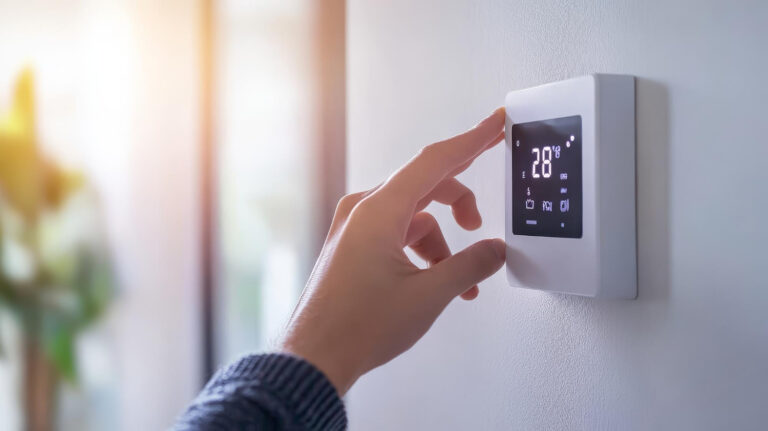
A smart temperature sensor is a device that continuously measures the temperature of a room and sends this information to a connected smart home system.
Unlike traditional thermostats that only monitor one location, smart sensors can be placed in different areas of the home to provide a more accurate picture of indoor conditions. A typical smart temperature sensor can,
- Monitor room temperatures throughout the day
- Detect temperature fluctuations quickly
- Communicate with smart air-conditioning systems
- Trigger automated cooling adjustments when needed
- Provide temperature insights through a mobile app
This allows homeowners to make more informed decisions about indoor climate control.
Why Can Some Rooms Feel Hotter Than Others During Summer?
Many homeowners notice that certain rooms feel warmer than others, even when the air-conditioning is running. Several factors can contribute to this issue,
- Direct sunlight entering through windows
- Poor airflow between rooms
- Different room sizes and layouts
- Heat generated by electronics and appliances
- Variations in insulation
A smart temperature sensor helps identify these differences by collecting accurate temperature readings from multiple locations. This allows cooling systems to respond more effectively to the actual conditions within the home.
How Can Smart Temperature Sensors Improve Home Comfort?
One of the main advantages of a smart temperature sensor is its ability to support automated comfort management. Benefits may include,
- More consistent cooling– Instead of relying on a single thermostat reading, multiple sensors provide a broader view of indoor temperatures. This can help reduce hot spots, maintain more balanced cooling and improve comfort in frequently used rooms.
- Automatic temperature adjustments– Many smart home systems can automatically adjust cooling settings based on sensor data. For example, cooling may increase when temperatures rise during the afternoon, and may reduce when rooms are unoccupied. Temperature settings can adapt based on daily routines.
- Better sleep comfort– Bedroom temperatures can fluctuate throughout the night. Smart sensors can help maintain a more stable sleeping environment by supporting automatic adjustments when needed.
Can Smart Temperature Sensors Help Reduce Energy Consumption?
While every home is different, smart temperature monitoring may help reduce unnecessary cooling. Potential advantages include,
- Preventing overcooling of empty rooms
- Supporting targeted temperature management
- Helping air-conditioning systems operate more efficiently
- Providing usage insights that encourage energy-conscious habits
Rather than running cooling systems at maximum settings continuously, homeowners can use real-time data to make more efficient adjustments.
What Features Should Homeowners Look For?
When choosing a smart temperature sensor, consider features such as,
- Real-time temperature monitoring
- Mobile app connectivity
- Smart home integration
- Multi-room support
- Automated scheduling capabilities
- Easy installation and setup
Selecting a system that works seamlessly with existing smart home devices can maximise convenience and performance.
Frequently Asked Questions
1. Where should a smart temperature sensor be placed?
For accurate readings, sensors are typically placed away from direct sunlight, air vents, and heat-producing appliances. Living rooms and bedrooms are common locations.
2. Can a smart temperature sensor work without a smart thermostat?
Some models can provide monitoring data independently, while others are designed to work alongside smart thermostats or home automation systems.
3. Are smart temperature sensors suitable for apartments?
Yes. They can be useful in apartments, condominiums, and landed properties by helping monitor indoor temperatures more accurately.
4. Do smart temperature sensors require professional installation?
Many consumer models are designed for simple installation. However, integrated smart home systems may benefit from professional setup.
Looking for Smarter Home Comfort Solutions in Singapore?
A smart temperature sensor can play an important role in creating a more comfortable and energy-efficient home during Singapore’s warmer months. By providing accurate temperature monitoring and supporting intelligent automation, these devices help homeowners maintain a more consistent indoor environment.
If you’re exploring smart home solutions that can enhance comfort and convenience, the team at Mowe can help you understand the available options and identify a setup that suits your home and lifestyle.
Consider scheduling a consultation with Mowe and discover how smart home technology can help you stay comfortable all year round.
RECENT POST